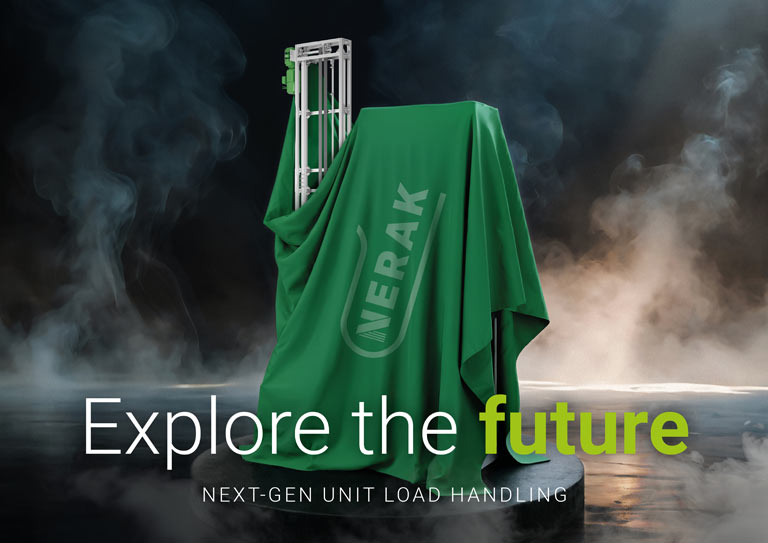
1987
How it all began.
In April 1987, on an inconspicuous attic in Fuhrberg near Burgwedel close to Hanover, the foundation was laid for something that would later set standards worldwide: Nerak GmbH Fördertechnik. Here, in modest premises, the vision of a company that now operates globally began.
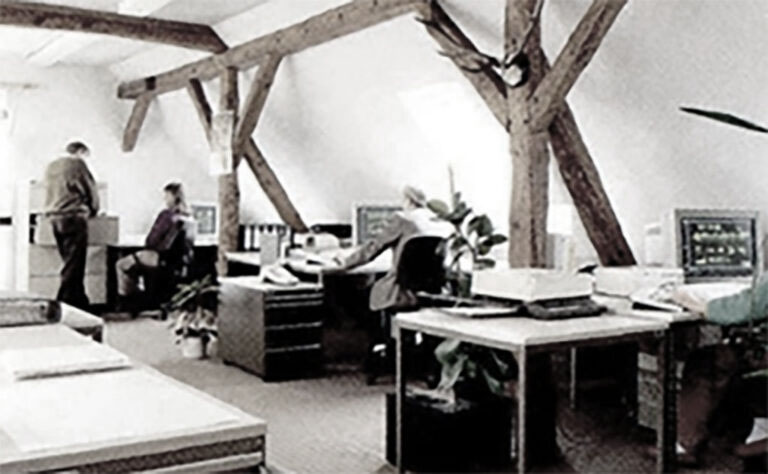
1987
It began with a rise.
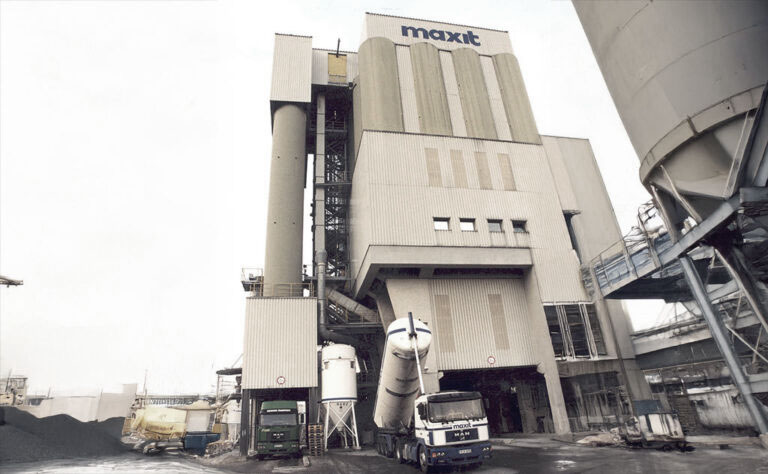
Nerak’s first system – a WB 640 bucket elevator – went into operation almost four decades ago at the Heidelberger Zement works. What began back then as a bold first step into industrial history still stands there today. Unshakeable. Reliable. A quiet monument to engineering, quality, and the pioneering spirit of our beginnings.
For almost 40 years, this bucket elevator has carried materials – and at the same time our vision: to create solutions that endure for generations.
Nerak’s journey did not start with a system alone. It began with a promise. And that promise continues there to this day.
1988
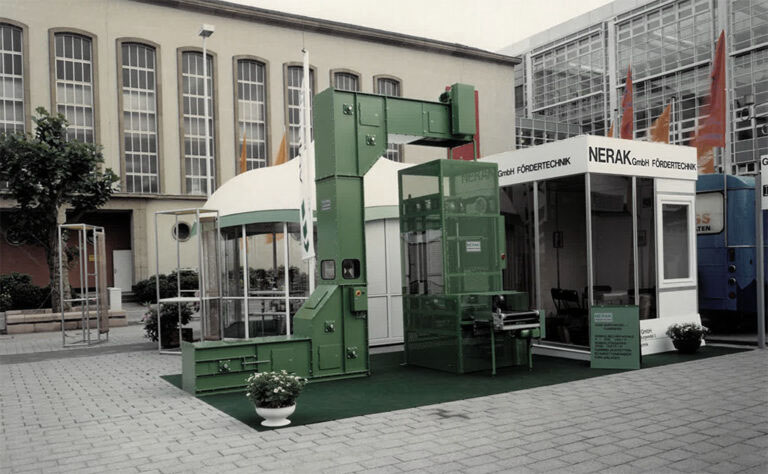
Nerak’s first appearance on the big stage – Achema 1988.
In 1988, Nerak presented itself publicly for the first time at Achema in Frankfurt am Main – one of the world’s leading trade fairs for chemical engineering and biotechnology. This exhibition appearance marked a significant milestone: for the first time, the young company faced an international professional audience, sending a clear signal of its ambitions in the global market.
1988
Growth gains momentum.
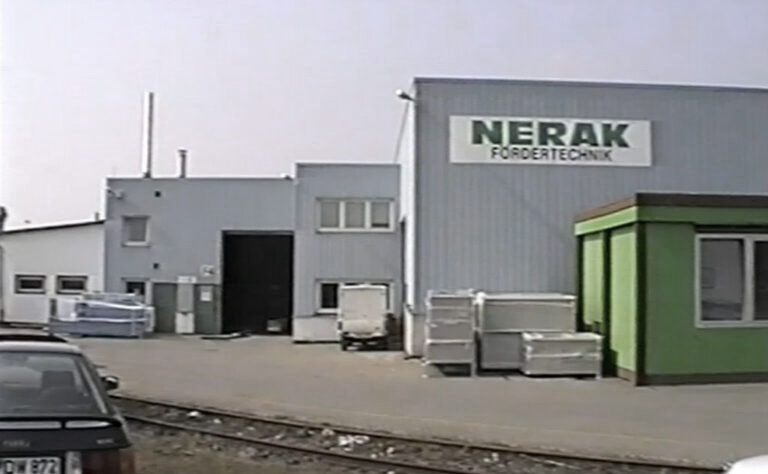
With increasing success, space became tight: Nerak reached a scale that required its own production area. In Celle, “Am Holzhof”, larger manufacturing halls were rented for the first time.
With the rubber block chain, Nerak secured the central element of its conveying technology – the technical heart of the company. To give this core product the space it deserved, halls were rented in Hambühren, dedicated exclusively to rubber block production.
1993
Strategic expansion.
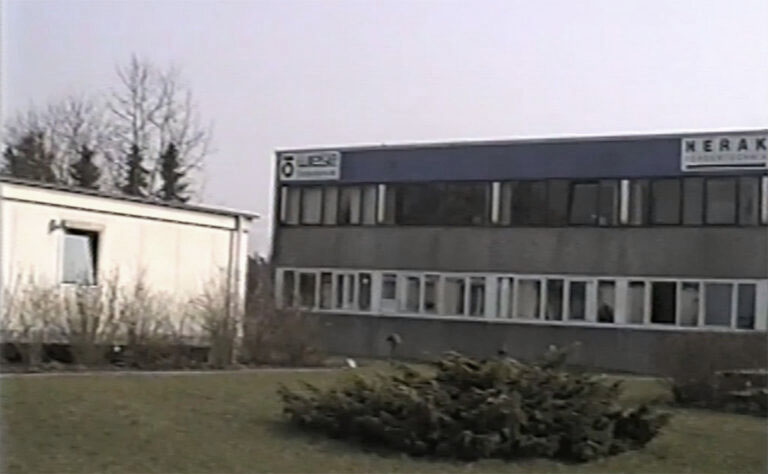
With the partial acquisition of Wiese Förderelemente, Nerak moved its administration and service into the former Wiese building in Fuhrberg (Burgwedel). The first technical centre was also established there – a central place for testing and further development of conveying technology.
1994
Growth through expertise.
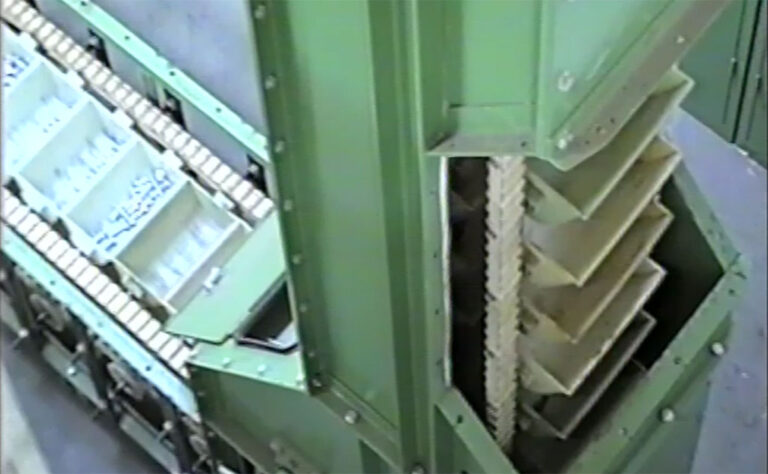
Through the partial acquisition of Waldemar Glowatzki Maschinen- und Apparatebau, Nerak expanded its technical know-how in the field of conveying systems and thereby specifically strengthened its development expertise.
1997
A home built from our own strength – Nerak builds for the future.
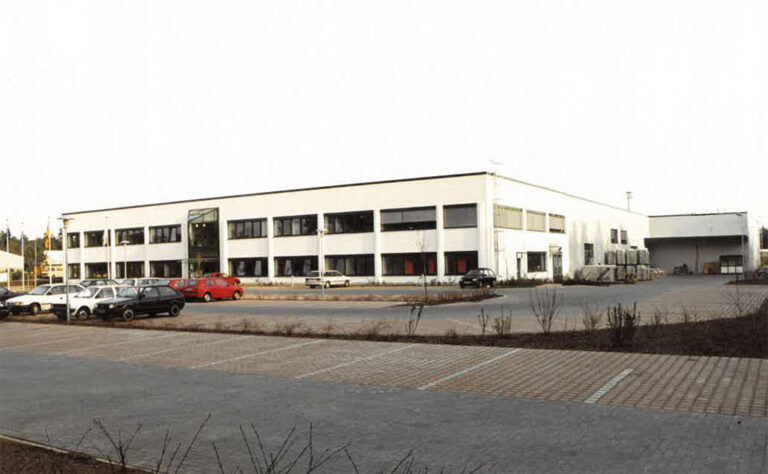
With the new building in Hambühren, a central location was created for the first time, realised entirely by the company itself. Administration and production from Fuhrberg and Celle, as well as rubber block production (GBK) from Hambühren, were brought together here.
This gave Nerak its own home – a symbolic step towards identity, self-confidence, and the growing strength of the Nerak brand.
What had previously been spread across several locations was now united under one roof – a visible sign of the company’s growing confidence in its own capabilities and the beginning of a new era.
2000
When growth requires new space.
The rubber block chain had long been more than a product – it had become the driving force within Nerak. With steady growth, the ambition also grew to not only manufacture this core element but to actively further develop it.
The move of rubber block chain
production to Salzwedel was therefore more than a logistical decision. It was a commitment: to quality, to specialization – and to the belief that Nerak’s heart deserved its own forward-looking development space.
2010
Space for development – expansion creates room for technology and the future.
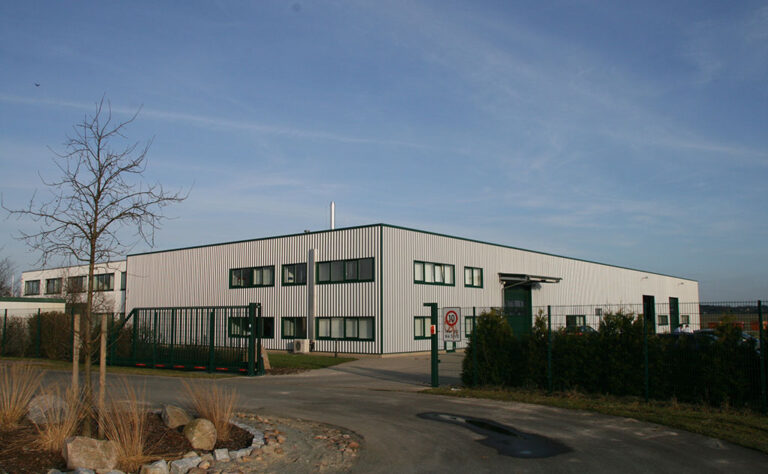
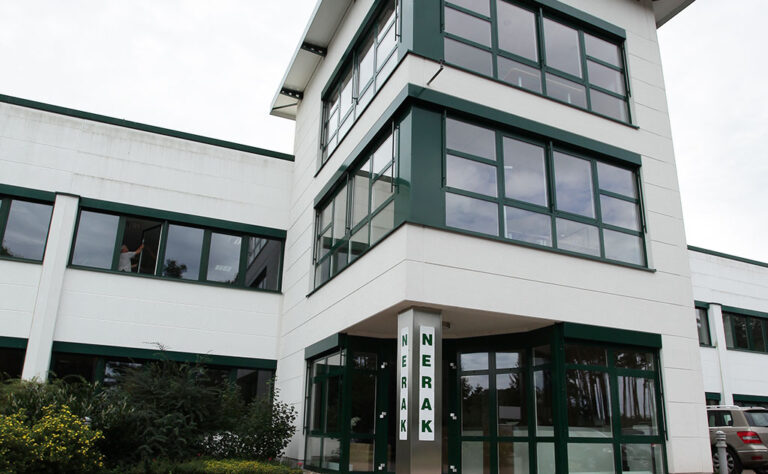
With an additional hall area of 2,000 m², a new dimension of working and presenting opened up for Nerak. At the same time, the location received a new look: the entrance area was redesigned and architecturally enhanced with a tower. With the integration of a wood chip system based on a Nerak bucket elevator, Nerak also emphasised its commitment to combining progress and sustainability. The expansion was therefore far more than just a spatial extension – it was a commitment to future viability and the presentation of the company’s own strength.
2023
Sustainable Energy – Photovoltaics as an Integral Part of the Site
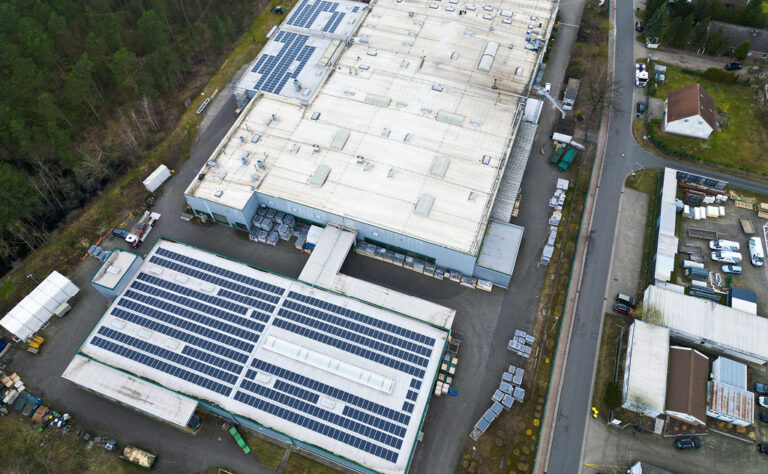
<p style=”text-align: justify”>Since 2023, photovoltaic systems have been installed at the NERAK site. By harnessing solar energy, NERAK consistently strengthens its sustainable orientation and reduces its reliance on conventional energy sources.</p>
<p style=”text-align: justify”>The integration of the PV systems is not merely a technological step, but a clear expression of long-term responsibility toward the environment and future generations. It meaningfully complements existing initiatives and underscores the commitment to permanently combining efficiency, innovation, and sustainability.</p>
2026
Innovation with a Future Focus – Next-Gen Unit Load Handling
In 2026, we marked a key milestone in our history of innovation: the successful launch of our Next-Gen Unit Load Handling solutions:
NERAK Reciprocating Lift KH1
NERAK Vertical-Sorter Single-Line
NERAK Vertical-Sorter Multi-Line
With this new generation of unit load solutions, we have set new standards in efficiency, flexibility, and future readiness.
Next-Gen Unit Load Handling combines intelligent system architecture, modular scalability, and maximum process reliability. It was specifically developed to meet the growing demands for automated, sustainable, and high-performance logistics and handling processes.
The launch of these innovations exemplifies our commitment not only to envision innovation, but to translate it into market-ready, forward-looking solutions – actively shaping the next generation of industrial processes.